Hydraulic Hose Crimping

August 26, 2021


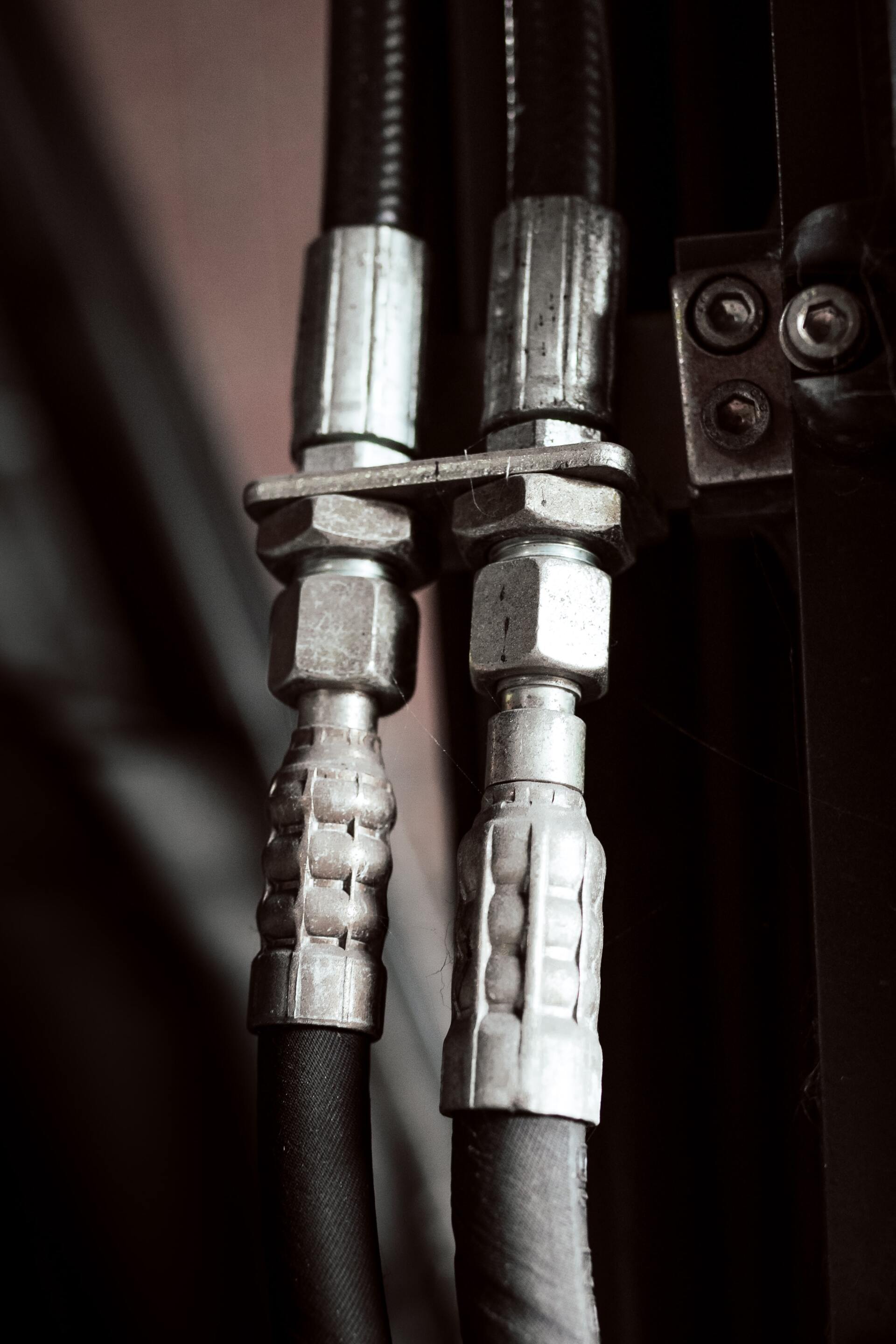
A well-crimped seal is essential to a functional and efficient
hydraulic hose. But just how does the job get done?


A good, tight, even
crimp secures the hose connector in place and allows the fluid to move through freely without leaks. To properly crimp your hose, you’ll need a crimper that is designed for use on a specific hose diameter. You should choose your crimper based on the hose you’ll be using, not the other way around.


When assembling your hydraulic hose setup, you should choose an appropriate hose based on a few factors: size, temperature, application, media and pressure. While these factors are all important to the functionality of your hydraulic system, size dictates which crimper you’ll use to 
secure the fitting. The hose size is measured in diameter, and the one you choose can affect the cost, pressure capability, rate of flow, and operational efficiency. 


The Tools


To crimp a hydraulic hose, you can use one of two methods: hand crimping or hydraulic crimping. Both are equally effective and can yield high-quality crimps, but which one you use depends on your performance needs (including crimp force and maximum crimp, the materials being used, and sometimes even the brand of hose and/or equipment being used.


Hand crimpers

As their name would suggest, these tools are manually operated. Their portability and relative ease of use make them ideal for small-scale crimping jobs. Hand crimpers are most often used for piecework, low-volume manufacturing, and mobile assembly. Most welders and electricians will carry around a hand crimping device in their toolbag. The device has a tray that opens up, and you can slot in the appropriately-sized crimper dies for the job, meaning they’re pretty versatile and simple to use. 


The downside of these handheld tools is that they are slightly less precise than their hydraulic-powered counterparts. Hydraulic tools employ something called ‘automatic crimp diameter’ measured in micrometers, which ensures the closest, most precise crimp on the hose. Hand crimpers simply rely on the good judgment of the user, and although they’ll get the job done, ultra-fine and exact crimping may be better achieved using a hydraulic-powered device.


Hydraulic crimping tools

Hydraulic crimping tools are considerably more expensive than hand crimping tools, but they are also far more effective for crimping high-volume runs. These tools are preferable for demanding industrial environments, where crimping is a regular operation, and heavy-duty machinery is needed for maximum speed and precision. 


These devices are typically much larger, heavier, and more sophisticated than their handheld counterparts. It’s also faster and more powerful, capable of churning out multiple tight, exact crimps at relative speed. However, some hydraulic crimping tools have limited versatility, as the crimping dies compatible with the machine strongly encourage the user to source parts from the same manufacturer.


For a professional-quality hydraulic crimp, a wide variety of tools to get the job done and knowledgeable assistants who can answer all your questions,
Action Supply is the go-to source for all things industrial.
November 20, 2025
Finish the Year Strong with Smart, Strategic Purchasing
October 22, 2025
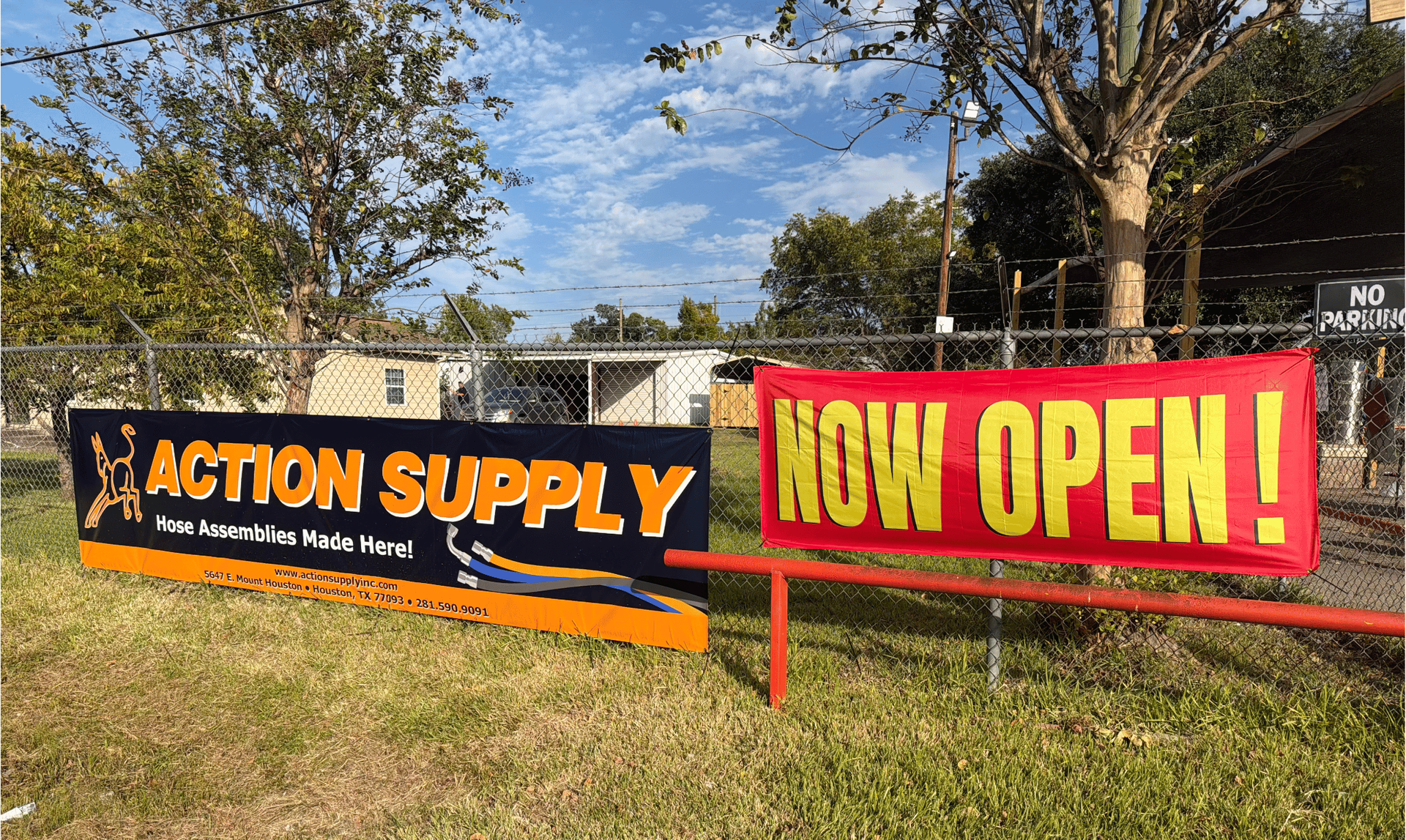
In the world of industrial supply, especially when it comes to hydraulic hoses and fittings, what truly sets a provider apart isn’t just product stock. It’s relationships . At Action Supply, we’ve built our business over four decades on more than inventory: we’ve built it on reliability, responsiveness, and customers trusting us as their go-to partner. The Local Partner Advantage Faster turnaround : Local on-site hose assemblies, quick access to inventory, and the ability to respond when downtime is unacceptable. We work hard to complete your projects with higher quality and fast turn around times. Better communication : You’re dealing with a team that knows your region, your industry, and your challenges—not a generic call center. Inventory you can count on : When your partner manages stock on-site or nearby, you’re less likely to face costly delays. Action Supply offers inventory management services to keep critical parts ready when you need them. Service & Support That Make the Difference Here’s how we add value for our customers year-round: Custom Hose Assemblies On-Site : We don’t just stock hoses; we build them to spec, on-site, matching exact lengths, fittings, and ratings so there’s no guess-work or field fabrication headaches. Consultation & Technical Guidance : Hydraulic systems are complex. We help customers select the right hose, fitting, and coupling for factors like pressure, fluid compatibility, abrasion, and environment. Speed When It Counts : Downtime kills productivity. Having a local partner means faster pick-up, faster delivery, and in many cases, faster problem resolution because we’re already on-site or nearby. Proactive Inventory Planning : From planned maintenance to emergency response, we partner with customers to anticipate needs rather than just react. A true partnership means fewer surprises. A Long-Term View: Why Trust Matters Relationships are built on consistency over time. At Action Supply, our “we’ve worked hard for over 40 years” mindset means we place value on being there for our customers today…and five, ten, twenty years down the road. That long-term presence gives customers the confidence to count on us for standard supply, for emergency replacement, and for growth scale-up. When you know your supply partner will show up, send the right part, understand your system, and back it with service, you’re not just buying hoses or fittings. You’re buying peace of mind. How to Make the Most of Your Supply Partner Here are a few actions to ensure your local supply relationship delivers maximum value: Treat them as part of your team : Share your upcoming projects, shutdown schedules, and maintenance plans with your supply partner. Engage early : Instead of reaching out only when a hose fails, loop in your supply partner during planning or design phases. Keep open communication : Share what matters to you (lead time, budget constraints, delivery windows) and let them tailor service accordingly. Leverage their expertise : Ask questions about alternatives, better materials, and long-term cost savings.  In industrial operations, margins are tight, downtime is costly, and every component matters. At Action Supply, we believe relationships matter because when you win, we win. And when you’re up against the clock, facing tough specs, or dealing with complex hydraulic systems, you’ll appreciate having a partner who’s local, dedicated, and backed by decades of experience.
September 17, 2025
When uptime, safety, and fluid integrity matter, choosing the correct fitting is the difference between a reliable system and unexpected downtime. The right fitting ensures a leak-free seal, matches pressure and fluid compatibility, and simplifies serviceability in the field. Action Supply builds and manages custom hose assemblies daily and can help match fittings to your exact application. Material Selection: Match the Environment Material choice impacts corrosion resistance, strength, and cost. Stainless steel (316 where marine exposure or salt spray is present) offers excellent corrosion resistance and strength for structural or submerged fittings. Brass is economical and machinable, and performs well in many freshwater or general industrial applications, but can corrode faster in saline environments. Choose material based on fluid chemistry, temperature, and exposure to salt or corrosives. A Practical Checklist for Choosing Fittings Identify the media: hydraulic oil, freshwater, saltwater, chemical — materials and sealing change accordingly. Confirm pressure & temperature ratings: match fittings and hose to the system’s max working and burst pressures. Match thread type and size: NPT ≠ BSP — use thread gauges or manufacturer tables if unsure. Choose sealing method: metal-to-metal (37° JIC/AN), ORFS face-seal, or thread-seal (NPT + tape/compound). Account for serviceability: will techs need to disconnect often? Choose fittings that tolerate repeated assembly. Plan for corrosion: in marine or corrosive environments choose 316 stainless, bronze, or specially coated parts. Document and label: record part numbers, thread specs, and orientation to remove guesswork on replacements. Installation & Testing Tips Use the correct torque spec for the fitting type; overtightening can damage seals or distort threads. For ORFS, always replace O-rings during reassembly and inspect sealing surfaces for nicks. For pipe threads (NPT), use appropriate thread sealant or PTFE tape and apply properly (direction, number of wraps). Pressure-test new assemblies at the manufacturer-recommended proof pressure before returning equipment to service. When to Call the Experts at Action Supply If your job is complex (mixed standards on site, high-pressure hydraulic systems, or marine installations), bring the assembly to the shop or have Action Supply’s on-site team build and verify the assembly. We offer on-site hose assemblies, inventory management, and industry-grade fittings (including Eaton/Weatherhead hoses and couplings) so you get the right part and verified performance the first time. Call (281) 315-3841 or use our contact form to request on-site assembly or inventory support.